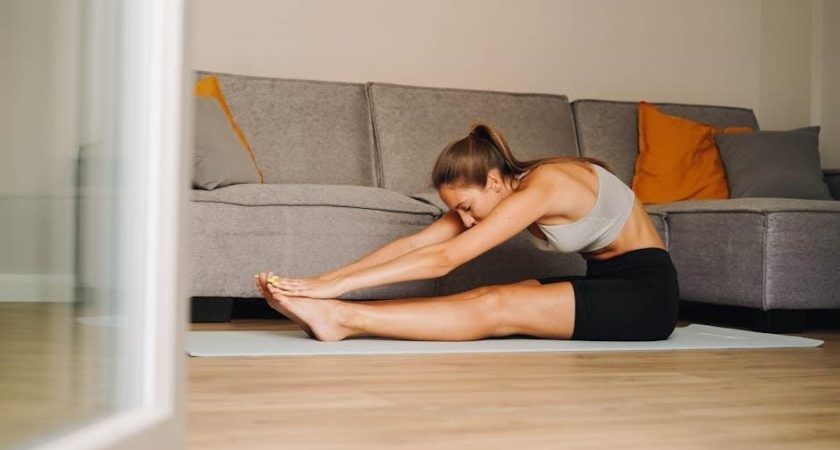
Quadratus Lumborum Stretch PDF: A Comprehensive Guide
Discover effective QL stretches, exercises, and release techniques within this guide, aiding spinal stability and pelvic alignment. Learn to alleviate back pain and improve posture!
Understanding the Quadratus Lumborum (QL) Muscle
The Quadratus Lumborum (QL) is a deep core muscle crucial for spinal stability and movement. Positioned on either side of the lumbar spine, it extends from the iliac crest to the 12th rib and the lumbar vertebrae. Its primary functions include lateral flexion of the spine, extension of the lumbar spine, and stabilization of the pelvis. Understanding its role is key to addressing back pain.
A healthy QL muscle contributes to proper posture and efficient movement patterns. However, it’s often overlooked, leading to imbalances and discomfort. Tightness or weakness in the QL can manifest as lower back pain, hip pain, and even breathing difficulties. Therefore, incorporating targeted stretches and exercises is vital for maintaining optimal QL function. This guide provides resources to help you understand and address QL-related issues.
QL Muscle Anatomy and Function
The Quadratus Lumborum (QL) originates from the iliac crest, lumbar vertebrae (L1-L4), and the 12th rib, inserting along the transverse processes of L1-L4. This unique anatomical arrangement allows for powerful lateral flexion and spinal extension. Its deep location, beneath other back muscles, often contributes to overlooked pain patterns. The QL’s function extends beyond simple movement.
It actively stabilizes the spine and pelvis, particularly during unilateral movements like walking or lifting. Peloton instructor Erik Jäger emphasizes its role in maintaining spinal and pelvic stability. Dysfunction can disrupt this stability, leading to pain and impaired movement. Proper QL function is essential for efficient force transfer throughout the body. Understanding its anatomy clarifies why targeted stretching and strengthening are so effective.
Identifying QL Muscle Weakness
Assessing QL weakness involves observing movement patterns and performing specific self-tests. A common indicator is difficulty maintaining a stable posture during single-leg stance or resisted trunk rotation. Individuals with QL weakness may exhibit a subtle “give way” sensation on the affected side. Another clue is limited range of motion during lateral bending, particularly when resisting the movement.
Fitness 4 Back Pain highlights the importance of self-testing for a potentially weak QL. Palpation can reveal tenderness or reduced muscle tone. Weakness often presents alongside tightness, creating a complex interplay of muscle imbalances. Identifying weakness is crucial for tailoring a rehabilitation program. Strengthening exercises, alongside stretching, are vital for restoring optimal QL function and preventing future issues. Early detection allows for proactive intervention.
Common Causes of QL Tightness
Several factors contribute to QL tightness, often stemming from postural imbalances and movement patterns. Prolonged sitting, especially with poor lumbar support, is a significant culprit. Repetitive twisting motions, common in certain occupations or sports, can also overload the QL. Anterior pelvic tilt, frequently linked to tight hip flexors, places increased strain on the muscle.
Bilateral QL tightness, as noted by Pelvic Clock Exercise resources, often results in hyperlordosis. One-sided tightness can arise from leg length discrepancies or asymmetrical loading. Dehydration and electrolyte imbalances may also contribute to muscle tension. Ignoring early signs of discomfort can lead to chronic tightness and pain. Addressing these underlying causes is essential for effective, long-term relief and preventing recurrence.
QL Stretching Techniques
Explore diverse stretches – seated bends, lying twists, and knee-to-chest poses – to target the QL muscle effectively. Improve flexibility and reduce discomfort!
Seated Quadratus Lumborum Stretch
Begin by sitting comfortably in a chair with your feet flat on the floor. Ensure your spine is straight, but not stiff. Slowly bend forward from the waist, reaching towards your left side.
Maintain a straight back as you lean, avoiding rounding. Raise your right arm overhead, enhancing the stretch. Focus on feeling the elongation along the right side of your torso, specifically targeting the QL muscle.
Hold this position for 20 to 30 seconds, breathing deeply and evenly. Repeat the stretch on the opposite side, bending towards your right and raising your left arm. This stretch effectively targets the QL, promoting flexibility and relieving tension. Remember to listen to your body and avoid pushing beyond your comfortable range of motion. Consistent practice can significantly improve QL flexibility and reduce back pain.
Side Bend Stretch in Seated Position
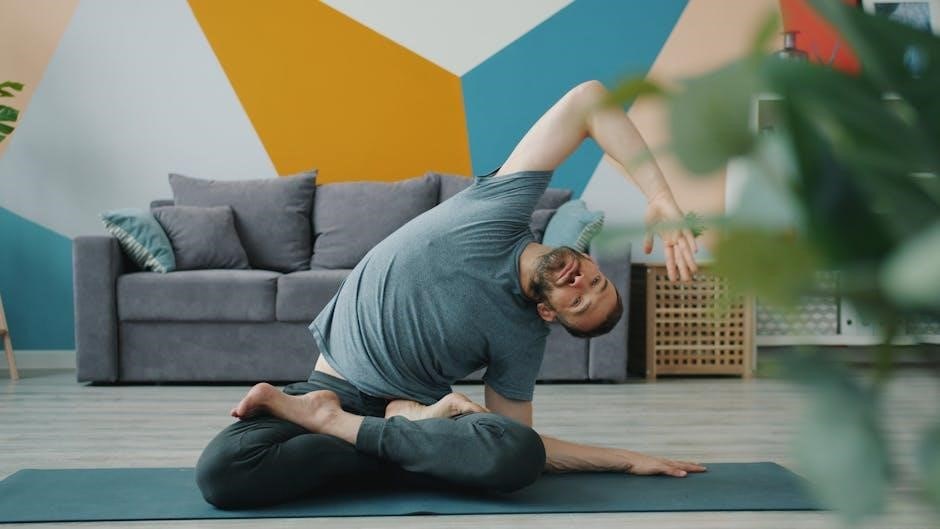
Start by sitting upright in a chair, feet firmly planted on the floor. Maintain a neutral spine, avoiding slouching or excessive arching. Gently bend to the left side, keeping your hips stable and facing forward.
Simultaneously, raise your right arm overhead, extending it towards the ceiling to deepen the stretch. Feel the stretch along the right side of your body, focusing on the area between your ribs and pelvis – where the QL muscle resides.
Hold this position for 20-30 seconds, breathing deeply and allowing the stretch to unfold. Repeat on the opposite side, bending to the right and raising your left arm. This variation is excellent for isolating the QL. Ensure you don’t force the movement; listen to your body. Regular practice can improve flexibility and alleviate lower back discomfort.
Lying Quadratus Lumborum Stretch
Begin by lying on your back with your knees bent and feet flat on the floor. Keep your shoulders relaxed and your spine in a neutral position. Gently draw both knees towards your chest, then slowly lower them to one side – for example, towards the left.
Extend your right arm out to the side, keeping your shoulder flat on the floor. Focus on keeping both shoulders grounded as you allow your knees to fall towards the right. You should feel a stretch along the left side of your lower back, targeting the QL muscle.
Hold this position for 20-30 seconds, breathing deeply. Repeat on the opposite side, lowering your knees to the right and extending your left arm. This stretch is effective for releasing tension in the QL. Remember to avoid forcing the movement and listen to your body’s signals.
Stretch with Knee to Chest
Start by lying on your back with your knees bent and feet flat on the floor. Maintain a neutral spine, ensuring your lower back is gently pressed into the surface. Slowly bring one knee – let’s begin with the right – towards your chest, clasping your hands behind your thigh or over your shin.
Gently pull your right knee closer to your chest, feeling a stretch along the side of your lower back. To specifically target the QL, slightly rotate your right hip away from your shoulder as you pull the knee in. This adds a rotational component to the stretch.
Hold this position for 20-30 seconds, breathing deeply and relaxing into the stretch. Repeat on the left side. This stretch helps to lengthen the QL and alleviate lower back discomfort. Avoid bouncing or forcing the movement; prioritize a gentle, controlled stretch.
Reaching Stretch with Hip Lift
Begin by lying on your back with knees bent and feet flat. Extend your arms overhead, keeping them as straight as comfortable. Initiate the stretch by slowly lifting your hips off the floor, creating a gentle bridge.
As your hips lift, simultaneously reach your left hand towards your right heel, aiming to increase the stretch along the side of your lower back. Focus on maintaining a stable core and avoiding any excessive arching in your lower back. Feel the QL muscle lengthening with the combined hip lift and reach.
Hold this position for 20-30 seconds, breathing deeply. Lower your hips and repeat on the opposite side, reaching your right hand towards your left heel. This dynamic stretch effectively targets the QL, promoting flexibility and reducing tension. Remember to listen to your body and avoid pushing beyond your comfortable range of motion.
Advanced QL Stretching & Exercises
Explore dynamic stretches, foam rolling, and trigger point release for deeper QL muscle relief. Enhance stability and function with targeted exercises!
Pelvic Clock Exercise for QL Activation
The Pelvic Clock is a fantastic exercise to improve awareness and control of pelvic movement, directly impacting QL muscle activation and function. Imagine your pelvis as the hands of a clock. Lying on your back with knees bent and feet flat, gently tilt your pelvis forward (12 o’clock – creating a small arch in your lower back), then backward (6 o’clock – flattening your lower back against the floor).
Next, move your pelvis to the right (3 o’clock) and then to the left (9 o’clock). Focus on small, controlled movements. This exercise helps to mobilize the lumbar spine and engage the QL muscles in a coordinated manner.
Performing 10-15 repetitions in each direction can significantly improve QL activation and address imbalances. It’s a foundational exercise for restoring proper movement patterns and preventing future QL tightness or dysfunction. Consistent practice is key to reaping the benefits!
Dynamic QL Stretches
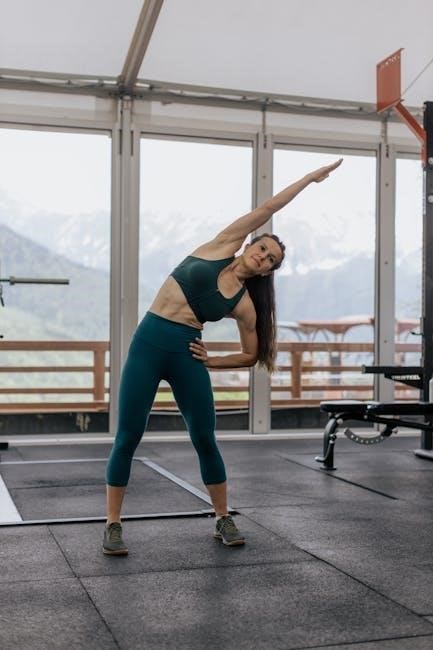
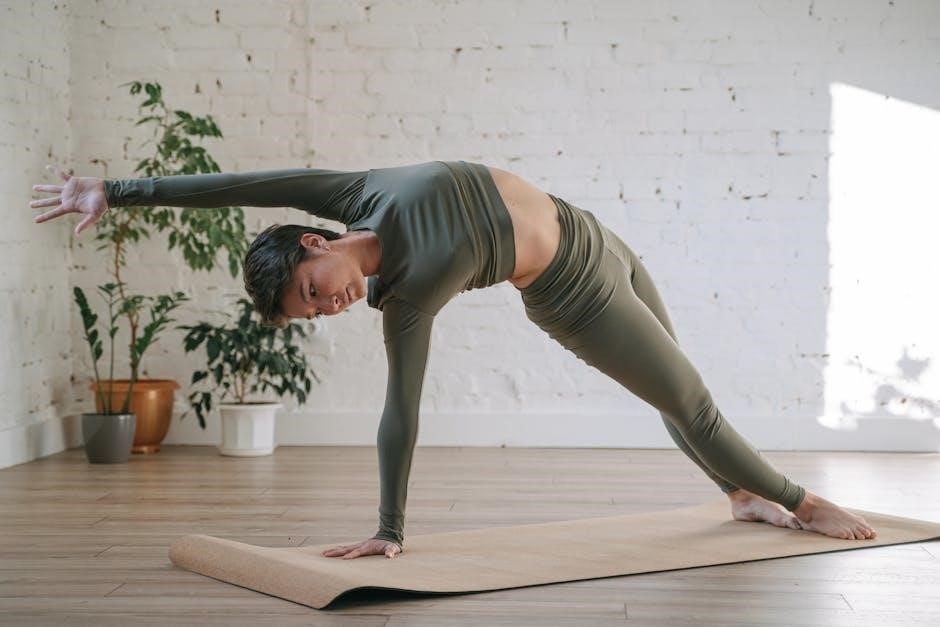
Dynamic stretches, unlike static holds, involve controlled movements through a range of motion, preparing the QL muscle for activity and improving flexibility. A simple dynamic stretch involves torso twists while seated or standing. Gently rotate your upper body from side to side, keeping your core engaged and movements fluid.
Another effective stretch is the standing side bend with arm reach. Slowly bend to one side, reaching your arm overhead, feeling a stretch along the QL. Alternate sides with each repetition.
Performing 10-15 repetitions on each side enhances blood flow and muscle elasticity. These stretches are ideal as part of a warm-up routine before exercise or as a way to maintain QL mobility throughout the day. Remember to avoid jerky movements and listen to your body!
Foam Rolling for QL Release
Foam rolling is a self-myofascial release technique that can effectively address QL tightness and trigger points. Lie on your side with the foam roller positioned just below your lowest rib, targeting the QL muscle. Support your upper body with your forearm and gently roll up and down along the muscle, applying moderate pressure.
Focus on areas that feel particularly tender or knotted. Spend 30-60 seconds on each side, pausing on any trigger points for 15-30 seconds. Controlled, slow movements are key; avoid rolling directly over the spine.
Remember to breathe deeply during the process. Foam rolling can be uncomfortable initially, but should not cause sharp pain. It’s a great addition to your QL care routine, promoting muscle relaxation and improved function.
Trigger Point Release for QL
Addressing trigger points within the Quadratus Lumborum (QL) muscle is crucial for pain relief and restoring optimal function. Lie on your side with a lacrosse ball or massage ball positioned directly on a tender spot in your QL. Gently apply pressure, maintaining a comfortable intensity.
Hold the pressure for 30-60 seconds, or until you feel a release in the tension. Slow, deep breaths can enhance the effectiveness. You can also gently move your body slightly to target different angles of the trigger point.
Repeat this process several times on each side, focusing on the most sensitive areas. This technique helps to deactivate trigger points, reducing muscle spasms and improving flexibility. Consistent trigger point release complements stretching and foam rolling.

QL Issues and Related Conditions
Explore how QL tightness links to anterior pelvic tilt, hyperlordosis, and spinal instability. Understand bilateral tightness effects and their impact on posture and pain.
QL Tightness and Anterior Pelvic Tilt
Anterior pelvic tilt, a common postural distortion, frequently arises from chronically tight quadratus lumborum muscles. When the QL muscles become shortened and overactive, they pull the pelvis forward, increasing the lumbar lordosis – the natural curve of the lower back. This tilting action shifts the body’s weight forward, potentially leading to lower back pain, hip flexor tightness, and even knee issues.
Bilateral QL tightness significantly contributes to this anterior pelvic tilt, creating an exaggerated curve in the lower spine. Regular stretching of the QL muscles is crucial for restoring proper pelvic alignment and preventing painful spasms. Addressing QL tightness helps maintain a healthy neutral position for the lumbar spine, ribcage, pelvis, and hips, ultimately improving overall biomechanics and reducing the risk of related musculoskeletal problems. Consistent stretching and strengthening exercises are key to long-term correction.
QL Dysfunction and Hyperlordosis
Hyperlordosis, an excessive inward curvature of the lumbar spine, often develops as a consequence of quadratus lumborum (QL) muscle dysfunction. When the QL muscles become imbalanced – typically tight on one side and weak on the other – they contribute to an altered spinal biomechanics. This imbalance pulls the spine into an exaggerated arch, creating hyperlordosis and potentially leading to lower back pain and discomfort.
QL dysfunction can stem from various factors, including poor posture, repetitive movements, or muscle imbalances. Addressing this dysfunction through targeted stretching and strengthening exercises is vital for restoring proper spinal alignment. Correcting QL imbalances helps reduce stress on the spinal joints, ligaments, and discs, alleviating pain and improving overall spinal health. A comprehensive approach, including QL stretches and core stabilization exercises, is essential for long-term management.
QL Pain and Spinal Stability
Quadratus lumborum (QL) pain significantly impacts spinal stability, as this muscle plays a crucial role in maintaining the integrity of the lumbar spine and pelvis. The QL directly influences the spine’s ability to resist unwanted movements and maintain a neutral position. When the QL is compromised – through tightness, weakness, or trigger points – it compromises this stability, increasing vulnerability to injury and pain.
Effective QL stretches and exercises, detailed within this guide, aim to restore optimal muscle function and enhance spinal stability. Strengthening the QL, alongside core musculature, is paramount for providing a solid foundation for movement and protecting the spine from excessive stress. Addressing QL pain proactively can prevent chronic back issues and improve overall functional capacity, promoting a healthier and more resilient spine.
Bilateral QL Tightness Effects
Bilateral tightness in the quadratus lumborum (QL) muscles presents unique challenges, often leading to significant postural imbalances. This guide details how simultaneous QL contraction can contribute to an anterior pelvic tilt, effectively increasing the lumbar lordosis – or the inward curve of the lower back – resulting in hyperlordosis. This altered spinal alignment can strain supporting ligaments and muscles, causing chronic lower back discomfort.
Regular stretching of both QL muscles is vital to counteract these effects, restoring a neutral pelvic position and reducing stress on the lumbar spine. The exercises and techniques outlined in this PDF resource focus on lengthening the QL, improving flexibility, and promoting balanced muscle activation. Addressing bilateral QL tightness is key to preventing painful spasms and maintaining optimal spinal health.
Practical Considerations
Optimize your QL stretching routine with consistent duration and frequency, tailoring modifications to your fitness level. Prioritize safety and understand potential contraindications.
Duration and Frequency of QL Stretches
Consistency is key when incorporating Quadratus Lumborum (QL) stretches into your routine. Aim to hold each stretch for 20 to 30 seconds, allowing sufficient time for the muscle fibers to lengthen and release tension. Repeating each stretch 2-3 times per session can further enhance flexibility and reduce tightness.
Frequency depends on your individual needs and the severity of your QL tightness. For preventative maintenance, performing these stretches 2-3 times per week can be beneficial. However, if you’re experiencing significant back pain or discomfort, daily stretching may be necessary, but listen to your body and avoid overexertion.
Gradually increase the duration and frequency of your stretches as your flexibility improves. Remember, the goal is to achieve a gentle stretch without causing pain. Integrating QL stretches into a broader routine of core strengthening and postural exercises will yield even more significant and lasting results.
Modifications for Different Fitness Levels
Beginners should start with gentler variations of QL stretches, focusing on controlled movements and avoiding overextension. The seated side bend is a good starting point, minimizing strain on the lower back. Reduce the range of motion initially, gradually increasing it as flexibility improves.
Intermediate individuals can progress to more challenging stretches like the lying QL stretch or knee-to-chest stretch, ensuring proper form and engaging core muscles for stability. Adding a slight hip lift during the reaching stretch can intensify the stretch.
Advanced practitioners can incorporate dynamic QL stretches and foam rolling to further enhance muscle release and flexibility. Consider integrating the pelvic clock exercise to activate and strengthen the QL muscle. Always prioritize proper technique and listen to your body’s limits.
Precautions and Contraindications
Individuals with acute lower back pain, spinal stenosis, or spondylolisthesis should consult a healthcare professional before attempting QL stretches. Avoid stretching if experiencing sharp or radiating pain, as this could exacerbate existing conditions. Pregnant women should modify stretches to accommodate their changing bodies and avoid excessive twisting.
Those with kidney issues should exercise caution, as the QL muscle is located near the kidneys. Listen to your body and stop immediately if you feel any discomfort or dizziness. Proper warm-up is crucial before stretching to prepare the muscles and reduce the risk of injury.
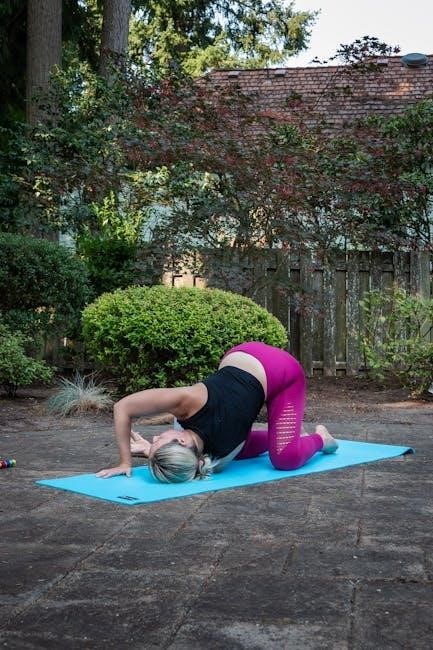
Always maintain controlled movements and avoid bouncing, which can lead to muscle strains. If you have a history of back problems, work with a physical therapist to develop a safe and effective stretching routine tailored to your needs.
Finding a Quadratus Lumborum Stretch PDF Resource
Numerous online resources offer Quadratus Lumborum (QL) stretch PDFs, providing visual guides and detailed instructions. Websites dedicated to fitness, physical therapy, and back pain relief frequently host these downloadable materials. Search terms like “QL stretch PDF,” “Quadratus Lumborum exercises PDF,” or “lower back pain stretches PDF” will yield relevant results.
Peloton and Fitness 4 Back Pain are examples of sites offering valuable information and potentially downloadable guides. Ensure the PDF is from a reputable source, ideally created by qualified healthcare professionals. Look for resources that include clear illustrations, step-by-step instructions, and modifications for different fitness levels.
Always prioritize resources that emphasize proper form and safety precautions to prevent injury. Consider consulting with a physical therapist for personalized recommendations and a tailored stretching program.