
Jump Ring Fundamentals
Jump rings are tiny, open metal circles linking jewelry parts. They act like miniature chain links, ranging from almost invisible to sizable. Common metals include sterling silver, gold‑filled, copper, and stainless steel, each offering different strength and finish. They enable secure, flexible links.
Definition and Common Uses
Jump rings are small, open metal circles that act as the fundamental linking element in jewelry. They are essentially miniature chain links, allowing designers to connect beads, charms, clasps, and other components with ease and precision. Typically made from sterling silver, gold‑filled, copper, or stainless steel, jump rings come in a wide range of sizes—from barely visible 18‑AWG rings to larger 12‑AWG rings that can support heavier stones. Their versatility makes them indispensable for earrings, necklaces, bracelets, and even intricate jewelry repairs. In earrings, a single jump ring can attach a single stud or a pair of dangles to a clasp. For necklaces, multiple rings can form a chain or link a pendant to a chain. Bracelets often use jump rings to secure a clasp or to attach decorative elements. In repair work, jump rings replace broken links or provide a temporary fix while a piece is sent for professional restoration. Because they are open, they can be opened and closed with pliers, allowing for quick adjustments or replacements. Their small size also means they can be used in delicate, fine jewelry where a bulky link would be visually disruptive. Overall, jump rings provide a flexible, reliable, and cost‑effective way to assemble and maintain a wide variety of jewelry pieces.
When selecting a jump ring, the wire diameter (gauge) and the inside diameter are the two most critical measurements. A 20‑AWG ring typically has a wire diameter of about 0.8 mm and an inside diameter of roughly 1.5 mm, making it ideal for lightweight earrings or small charms. A 16‑AWG ring, with a 1.2 mm wire diameter and a 2.0 mm inside diameter, can support heavier pendants or larger beads. Jewelry makers often choose rings in the 18–22 AWG range for everyday wear, while more specialized pieces may call for 24‑AWG or even 28‑AWG rings for ultra‑fine chains. The choice of metal also influences the ring’s durability and aesthetic; for instance, sterling silver offers a classic look but can tarnish, whereas stainless steel provides corrosion resistance and a modern sheen.
Handling jump rings requires care: thin gauges can deform easily, so using proper pliers and avoiding excessive force preserves the ring’s shape. For rings made of harder metals such as titanium or niobium, specialized tungsten‑carbide tipped pliers are recommended to prevent damage. When working with gold‑filled or silver rings, a gentle touch prevents scratching the surface, maintaining the piece’s luster. Proper storage, such as in a soft pouch or separate compartment, keeps rings from tangling or losing their shape.
Size Measurement Standards
Jump ring sizing relies on wire diameter (gauge) and inside diameter. Standard gauges (AWG, SWG) differ; converting to millimeters ensures precision. Accurate measurements guarantee secure links and proper fit for jewelry components. Use metric conversions for sizing.!!
Wire Diameter vs Inside Diameter
When selecting jump rings, understanding the distinction between wire diameter and inside diameter is essential. Wire diameter refers to the thickness of the metal strand used to form the ring, while inside diameter is the clear opening through which beads or components pass. A thicker wire yields a stronger ring but reduces the inside diameter, limiting the size of the item that can be threaded. Conversely, a thinner wire increases the inside diameter but may compromise structural integrity. For example, an 18 AWG ring typically has a wire diameter of about 1.0 mm and an inside diameter around 2.5 mm, suitable for medium‑sized beads. A 24 AWG ring, with a 0;5 mm wire diameter, offers an inside diameter near 3.5 mm, ideal for ultra‑fine chains. Proper matching of wire and inside diameters ensures secure closures, prevents accidental openings, and maintains the aesthetic flow of the piece.
- 18 AWG: wire 1.0 mm, ID 2.5 mm
- 20 AWG: wire 0.8 mm, ID 2.9 mm
- 22 AWG: wire 0.6 mm, ID 3.3 mm
- 24 AWG: wire 0.5 mm, ID 3.5 mm
- 26 AWG: wire 0.4 mm, ID 3.7 mm
Manufacturers may list ID in millimeters or gauge; always verify. When converting from AWG to metric, use standard tables: 18 AWG ≈ 1.02 mm, 20 AWG ≈ 0.81 mm, etc. The ratio of wire diameter to ID is roughly 1:2.5 for most rings, but can vary. Choosing the right combination depends on bead size, chain thickness, and desired strength. For ultra‑fine jewelry, a 26 AWG ring with a 0.4 mm wire and 3.7 mm ID offers minimal bulk while maintaining adequate strength. Always test a sample ring with the intended bead before final assembly.
When measuring, a tolerance of ±0.1 mm is typical for high‑quality rings. A ring with a 3.5 mm ID that actually measures 3.4 mm may still fit a 3.0 mm bead, but it can cause increased friction during wear. Conversely, an ID of 3.6 mm may allow the bead to slide too easily, risking accidental detachment. Therefore, jewelers often aim for a 0.3 mm clearance for beads larger than 3 mm, and 0.2 mm for smaller beads.
In practice, the choice between wire diameter and inside diameter is a balance between strength and convenience. A thicker wire (18 AWG) provides durability for heavy pendants, while a thinner wire (26 AWG) is preferred for delicate earrings. The inside diameter must accommodate the bead or component without excessive play, ensuring a seamless aesthetic and reliable closure during daily wear. Balance is critical!!
American Wire Gauge (AWG) vs Standard Wire Gauge (SWG)
American Wire Gauge (AWG) and Standard Wire Gauge (SWG) are two distinct systems used to identify wire thickness. AWG is a logarithmic scale commonly adopted in the United States, where a higher gauge number indicates a thinner wire. For jump rings, AWG values range from 18 to 26, with 18 AWG being the thickest and 26 AWG the thinnest commonly used. SWG, on the other hand, is a linear scale more prevalent in the United Kingdom and other Commonwealth countries. SWG numbers increase with wire diameter, so a 20 SWG wire is thicker than a 20 AWG wire. Because of this fundamental difference, converting between the two systems requires a lookup table or conversion formula. A 20 AWG wire, for example, has a diameter of approximately 0.81 mm, while a 20 SWG wire measures about 0.91 mm. Jewelers often rely on metric millimeter conversions for precision, especially when working with ultra‑fine chains or hypoallergenic metals. Understanding the distinction between AWG and SWG ensures accurate sizing, prevents accidental use of a ring that is too thin for a given bead, and guarantees consistent results across international suppliers. When ordering from overseas vendors, always confirm the gauge system used to avoid mismatched rings that could compromise the integrity of the finished piece.
jewelers should keep a conversion chart handy, as many suppliers list both AWG and SWG numbers. This minimizes ordering errors and ensures the chosen rings fit the design intent.!!
Metric Millimeter Conversion
When working with jump rings, the most reliable way to specify size is by the wire diameter in millimeters. The American Wire Gauge (AWG) system is logarithmic, so a 20 AWG ring has a diameter of roughly 0.81 mm, while a 24 AWG ring measures about 0.51 mm. In contrast, the Standard Wire Gauge (SWG) is linear; a 20 SWG ring is about 0.91 mm thick. Jewelers often convert these values to a single metric scale to avoid confusion, especially when sourcing from international suppliers. A handy conversion table lists common gauges: 18 AWG ≈ 1.02 mm, 20 AWG ≈ 0.81 mm, 22 AWG ≈ 0.64 mm, 24 AWG ≈ 0.51 mm, 26 AWG ≈ 0.40 mm. For ultra‑fine chains, a 24 AWG (0.51 mm) ring is typical, whereas a 28 AWG ring is only 0.32 mm thick and suitable for tiny beads. When measuring, use a digital caliper or a precision micrometer; even a 0.1 mm error can affect the closure strength. For hypoallergenic metals like titanium or niobium, the wire diameter is often specified in micrometers (µm); a 22 AWG titanium ring is 0.40 mm (400 µm) in diameter. Always double‑check the supplier’s millimeter specification before placing an order, as some vendors list the inside diameter rather than the wire diameter, which can lead to mismatched closures. By standardizing on millimeter measurements, jewelers ensure consistent ring strength, compatibility with beads, and predictable closure performance across all projects. Such precision saves timeand reduces waste to the craft

Gauge Selection Guidelines
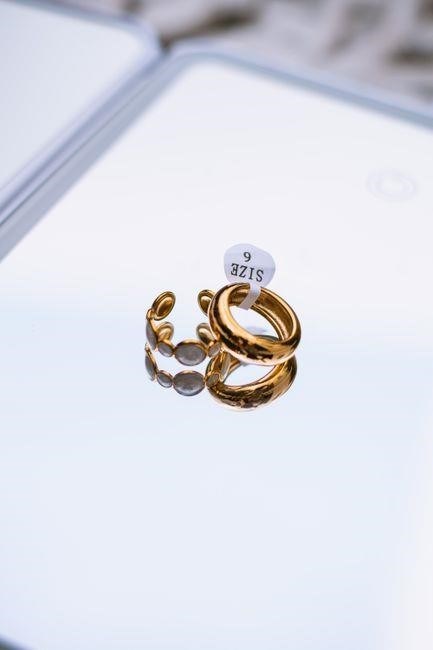
Select gauge by ring thickness and jewelry weight. Lightweight earrings use 18–22 AWG; fine chains 24–26 AWG; small beads 28–30 AWG. Thicker rings give stronger closure but less flexibility. Consider ring size for claspsecurity
- Use thicker rings for heavy pendants.
- Use thinner rings for delicate chains.
18–22 AWG for General Jewelry
Jump rings in the 18–22 AWG range strike a balance between strength and flexibility, making them ideal for everyday jewelry such as earrings, necklaces, and bracelets. The 18 AWG wire (≈1.02 mm diameter) offers a sturdy link that resists deformation, while the 22 AWG wire (≈0.64 mm diameter) provides a lighter, more discreet connection. These gauges accommodate a wide variety of metals—sterling silver, gold‑filled, copper, and stainless steel—without compromising durability. For most general pieces, 20 AWG (≈0.81 mm) is a popular choice, offering sufficient tensile strength for moderate‑weight items while remaining easy to open with standard jewelry pliers. When selecting a specific gauge, consider the overall mass of the piece, the size of the clasp, and the desired aesthetic. Thicker rings (18 AWG) are preferable for heavier pendants or larger beads, whereas thinner rings (22 AWG) suit delicate chains or small charms. It is also important to account for the metal’s hardness; harder alloys may require a slightly thicker gauge to prevent cracking during repeated opening and closing. Finally, always test a ring’s closure by gently pulling it open and closing it a few times to ensure it remains secure without excessive force. This gauge range provides versatility for most jewelry makers, allowing them to tailor the strength and appearance of their creations to the intended use and wearer comfort.
- 18 AWG: Ideal for heavy pendants, thick chains, and robust clasps.
- 20 AWG: Versatile for everyday wear, balances weight and strength.
- 22 AWG: Best for lightweight earrings, small charms, and fine chains.
The inner diameter of these rings typically ranges from 1.5 mm (18 AWG) to 2.5 mm (22 AWG), giving designers flexibility in sizing. For example, a 20 AWG ring with a 2.0 mm inner diameter fits comfortably around a 5 mm bead, while a 22 AWG ring with a 2.3 mm inner diameter is suitable for a 3 mm bead. In practice, jewelers often keep a small stock of 18, 20, and 22 AWG rings to cover most projects, ensuring quick access to the right gauge for any design.
24–26 AWG for Ultra‑Fine Chains
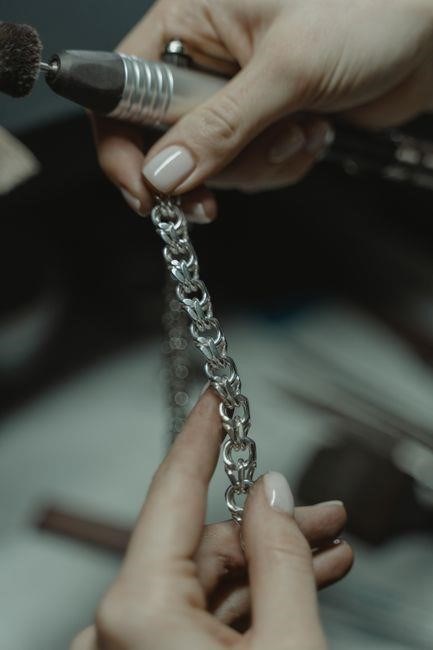
For jewelry that demands the utmost delicacy, jump rings in the 24–26 AWG range are the go‑to choice. The 24 AWG wire (≈0.51 mm diameter) and 26 AWG wire (≈0.40 mm diameter) produce rings that are almost invisible, allowing beads, stones, or tiny charms to sit flush without a bulky link. These gauges are especially suited for ultra‑fine box chains, filigree work, and miniature pendants where visual weight must be minimized. Because the wire is thin, the inner diameter typically falls between 1.0 mm and 1.5 mm, giving designers a precise fit for beads as small as 2 mm. The trade‑off is a reduced tensile strength; a 26 AWG ring can only support a few grams before deformation. Consequently, designers pair these rings with lighter metals such as niobium or titanium, which offer a higher strength‑to‑weight ratio and are hypoallergenic. When working with 24–26 AWG rings, use fine‑tipped pliers or a dedicated jump‑ring opener to avoid crushing the wire. A gentle, controlled opening motion preserves the ring’s integrity and ensures a secure closure. For projects that combine ultra‑fine links with a modest load—such as a small crystal pendant on a 24 AWG chain—these rings provide the perfect blend of elegance and functionality. In practice, jewelers keep a small inventory of 24 and 26 AWG rings to accommodate the most delicate designs, ensuring that each piece retains its intended lightness and visual appeal.
- 24 AWG: 0.5–0.6 mm wire, 1.0–1.2 mm ID.
- 25 AWG: 1.1–1.3 mm ID.
- 26 AWG: 1.2–1.5 mm ID, 2 mm beads.
Ideal for modern minimalist aesthetics—sleek and subtle.
Elegant!
28–30 AWG for Small Beads
When working with beads that measure 1–2 mm, jump rings in the 28–30 AWG range provide the optimal balance between visibility and strength. A 28 AWG wire (≈0.32 mm diameter) yields a ring with an inner diameter of roughly 0.9–1.1 mm, perfectly matching the size of tiny seed beads and miniature gemstones. The 29 AWG and 30 AWG wires (≈0.28 mm and 0.24 mm respectively) produce even slimmer links, which are ideal for ultra‑small charms, micro‑pendants, and fine filigree that require an almost invisible connection; Because the wire is extremely thin, the rings are lightweight and flexible, allowing them to wrap around beads without exerting excessive force that could distort the bead’s shape. However, the trade‑off is a lower load capacity; a 30 AWG ring can only support a few grams before it stretches or breaks. To mitigate this, jewelers often use a metal with high tensile strength, such as niobium or titanium, and pair the rings with a small, precisely sized clasp or a soldered closure for added security. When opening or closing these rings, a fine‑tipped plier or a dedicated jump‑ring opener is essential to prevent crushing the wire. In practice, 28–30 AWG rings are indispensable for creating delicate, lightweight jewelry that showcases the subtle beauty of small beads and micro‑details. These rings also allow for creative layering, where multiple small beads can be strung together with minimal bulk, preserving the airy feel of the piece. Because the rings are so fine, they can be used in combination with a single bead to create a subtle, almost invisible link that enhances the overall aesthetic. In addition, many jewelers prefer to use a small, high‑quality clasp that can be attached to a 28–30 AWG ring, ensuring a secure closure without compromising the delicate look. Overall, 28–30 AWG jump rings are the standard for any jewelry that prioritizes minimalism and the subtle presentation of small beads. The manufacturing process for these fine rings often involves precision laser cutting or high‑speed punching to maintain uniformity and prevent burrs that could snag on delicate beads. Jewelers also recommend cleaning the rings with a mild solvent before use to remove any oxidation that might interfere with the bead’s surface. When selecting rings, consider the bead’s material; for glass or crystal beads, a slightly thicker ring (28 AWG) may provide better support, whereas for metal beads, a 30 AWG ring can be sufficient. Finally, always test a single ring with the intended bead before committing to a full set, ensuring that the ring’s opening and closing mechanics are smooth and that the bead’s integrity remains intact.
- 28 AWG: 0.32 mm wire, 0.9–1.1 mm ID.
- 29 AWG: 0.28 mm wire, 0.8–1.0 mm ID.
- 30 AWG: 0.24 mm wire, 0.7–0.9 mm ID.
Metal Choices and Skin Sensitivity

Choosing jump‑ring metal matters for sensitive skin. Common options—sterling silver, gold‑filled, copper, stainless steel—offer durability but may cause irritation. Hypoallergenic choices like niobium or titanium provide a smooth, non‑reactive surface, ideal for daily wear. Perfect for everyday wear.
Common Metals: Silver, Gold‑Filled, Copper, Stainless Steel

Silver jump rings, typically sterling silver, offer a classic look and good corrosion resistance, but they can tarnish over time. Gold‑filled rings consist of a thin gold layer bonded to a base metal; they provide a gold appearance at a lower cost and are less prone to scratching. Copper rings are inexpensive and have a warm reddish hue, yet they may oxidize and cause skin discoloration. Stainless steel rings are strong, highly resistant to rust, and suitable for everyday wear, though they can sometimes feel heavier than other options. Each metal’s wire diameter and inside diameter vary, influencing the ring’s flexibility and suitability for different jewelry styles. Selecting the right metal depends on the desired aesthetic, durability, and wearer sensitivity.
Silver offers a timeless shine and excellent corrosion resistance, but it can tarnish if exposed to sulfides. Gold‑filled provides a gold look at a fraction of the cost, though the gold layer may wear over time. Copper is budget‑friendly and gives a warm hue, yet it oxidizes to verdigris and may cause skin discoloration. Stainless steel is durable, rust‑resistant, and suitable for everyday wear, though it can feel heavier and may scratch more easily than finer metals.
When selecting jump rings, consider the jewelry’s load and wear frequency. For pendants, choose thicker gauges like 18‑22 AWG. Verify the ring’s inside diameter matches the bead or component size to avoid misfits and ensure a secure, lasting connection!!?
Silver jump rings are prized for their classic shine and resistance to tarnish, yet they can develop a dull patina over time. Gold‑filled rings offer a gold aesthetic at a fraction of the cost, though the gold layer may thin with wear. Copper rings provide an affordable, warm hue but oxidize to verdigris and may discolor skin; Stainless steel rings are robust, rust‑resistant, and suitable for everyday wear, though they can feel heavier and scratch more readily than finer metals.
Niobium jump rings are valued for their ultra‑light weight and natural resistance to corrosion. Often anodized to produce vibrant colors, the base metal remains colorless, making them ideal for sensitive skin. Commonly available in 20–22 AWG, a 20 AWG ring has a wire diameter of about 0.8 mm and an inside diameter near 3.5 mm, which fits most bead sizes without compromising strength.

Titanium rings offer comparable lightness with a higher tensile strength, making them suitable for heavier pendants or multi‑layered designs. Their biocompatibility is well‑documented in medical implants, so they rarely provoke allergic reactions. Typical titanium jump rings are sold in 22 AWG, giving a wire diameter of roughly 0.6 mm and an inside diameter of about 3.2 mm, which balances flexibility and durability.
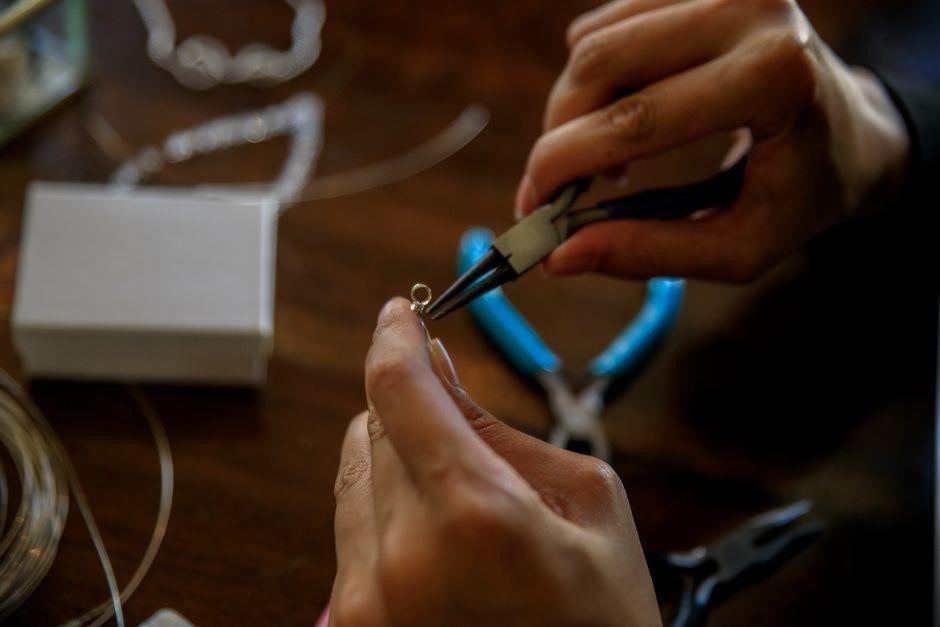
Both metals require specialized pliers for opening and closing. Tungsten‑carbide‑tipped pliers are recommended because the hardness of niobium and titanium can damage standard steel pliers. When soldering, use a low‑temperature solder or a laser‑soldering technique to avoid compromising the metal’s integrity. Proper handling preserves the hypoallergenic properties and extends the ring’s lifespan. These rings keep their shape during repeated use..
Niobium and titanium jump rings offer hypoallergenic options for sensitive skin. Lightweight, corrosion‑resistant, and strong, they suit a variety of jewelry styles—from delicate earrings to sturdy pendants.

Closure Types and Tools
Jump rings come in open, soldered, and split styles. Open rings close with pliers, soldered rings need a soldering iron, and split rings require a split‑ring plier. A split‑ring plier is essential for fine work! Use a split‑ring plier and a soldering iron for closure!.
Open, Soldered, Split Rings and Pliers Requirements
Lorem ipsum dolor sit amet, consectetur adipiscing elit.Lorem ipsum dolor sit amet, consectetur adipiscing elit.Lorem ipsum dolor sit amet, consectetur adipiscing elit.Lorem ipsum dolor sit amet, consectetur adipiscing elit.Lorem ipsum dolor sit amet, consectetur adipiscing elit.Lorem ipsum dolor sit amet, consectetur adipiscing elit.Lorem ipsum dolor sit amet, consectetur adipiscing elit.Lorem ipsum dolor sit amet, consectetur adipiscing elit.Lorem ipsum dolor sit amet, consectetur adipiscing elit.Lorem ipsum dolor sit amet, consectetur adipiscing elit.Lorem ipsum dolor sit amet, consectetur adipiscing elit.Lorem ipsum dolor sit amet, consectetur adipiscing elit.Lorem ipsum dolor sit amet, consectetur adipiscing elit.Lorem ipsum dolor sit amet, consectetur adipiscing elit.Lorem ipsum dolor sit amet, consectetur adipiscing elit.Lorem ipsum dolor sit amet, consectetur adipiscing elit.Lorem ipsum dolor sit amet, consectetur adipiscing elit.Lorem ipsum dolor sit amet, consectetur adipiscing elit.Lorem ipsum dolor sit amet, consectetur adipiscing elit.Lorem ipsum dolor sit amet, consectetur adipiscing elit.Lorem ipsum dolor sit amet, consectetur adipiscing elit.Lorem ipsum dolor sit amet, consectetur adipiscing elit.Lorem ipsum dolor sit amet, consectetur adipiscing elit.Lorem ipsum dolor sit amet, consectetur adipiscing elit.Short text. More!